

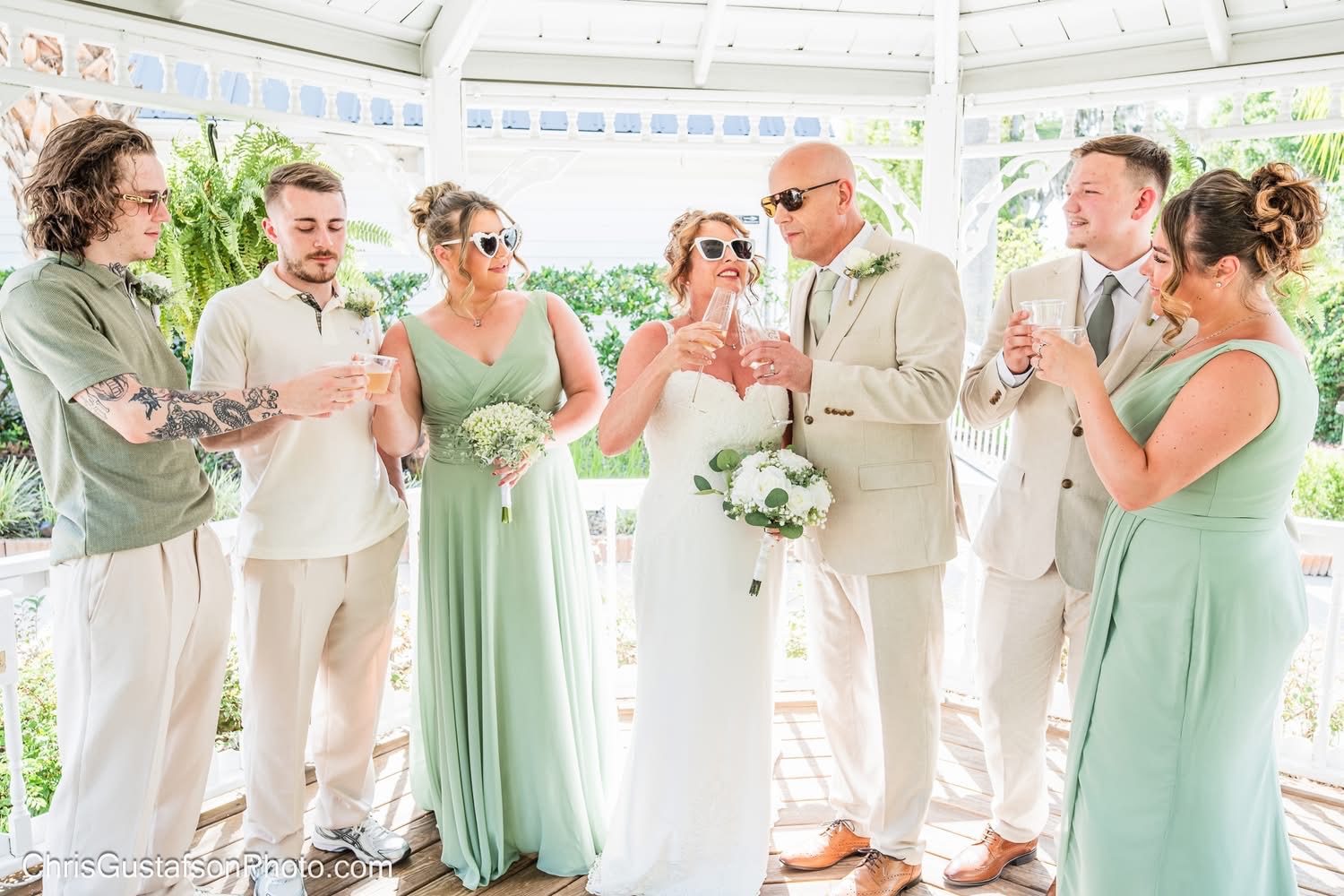
A civil wedding ceremony is a legal, non-religious way to get married — and in Florida it doesn’t have to mean a fluorescent-lit courthouse. Because the state lets a registered officiant marry you anywhere, a civil ceremony can be held in a garden, on a beach, or in your living room, and still be every bit as warm as it is simple. Plenty of couples want exactly that: the legal essentials, none of the religious elements, but not a cold or rushed five minutes either. This page explains what a civil wedding ceremony involves in Florida, and how an officiant can make a simple ceremony feel like yours.
What Is a Civil Wedding Ceremony in Florida?
A civil wedding ceremony is a legal, non-religious way to get married. It’s the ceremony version of a marriage — you get the declaration, the vows, and the pronouncement, without a faith tradition attached to any of it.
In Florida, a civil ceremony is just as legally binding as a religious one. Once the officiant signs your marriage license and it’s filed with the county, you’re married — full stop. “Civil” describes the tone and content of the ceremony, not its legal weight.
Couples choose a civil ceremony for all kinds of reasons. Maybe one partner is religious and the other isn’t. Maybe neither wants a faith-based service. Maybe you just want the day to feel like you, without borrowing traditions that don’t fit. None of those reasons need explaining to anyone but yourselves.
Do You Have to Get Married at a Courthouse for a Civil Ceremony?
No. In Florida, a registered officiant can perform a civil ceremony almost anywhere — you’re not limited to a courthouse window and a hallway full of strangers.
Courthouse weddings exist because a judge or clerk can solemnize a marriage on-site, and for some couples that’s exactly the quick, no-fuss option they want. But it’s not the only path to a legal, non-religious ceremony.
Hire an independent officiant instead, and the ceremony can happen in your backyard, on a beach at sunset, in a favorite restaurant’s private room, or anywhere else that means something to you. You get the same legal outcome as the courthouse, with none of the fluorescent lighting.
What Does a Civil Wedding Ceremony Include?
A civil wedding ceremony typically includes a short welcome, the declaration of intent, your vows, a ring exchange, and the pronouncement of marriage — the same backbone as any ceremony, minus the religious content.
What’s left out is the faith-specific material: no scripture readings, no prayers, no references to a specific tradition. What’s kept is everything that makes the moment feel real — your names, your story, and the words that make it official.
Some couples add a short unity ritual or a personal reading; others keep it to the legal essentials and nothing more. Whatever you include, you’ll still need your Florida marriage license signed and filed afterward — our marriage license guide covers exactly what to bring and when to get it.
This is where having a dedicated officiant makes the difference — you get someone who can hold the legal essentials and the warmth at the same time. Explore Orlando Wedding Officiants’ ceremony services or see our full sample ceremony script for what the day actually sounds like.
How Is a Civil Ceremony Different From a Religious Ceremony?
A civil ceremony has no religious elements, while a religious ceremony follows a specific faith’s traditions, readings, and language. Both are equally legal once the marriage license is signed and returned.
The difference is really about content, not commitment. A religious ceremony might include prayers, blessings, or scripture. A civil ceremony sticks to the legal core — welcome, declaration, vows, rings, pronouncement — and leaves room for whatever you want to add instead.
Neither option is more “real” than the other. Plenty of couples who aren’t religious still want a ceremony that feels meaningful, and a civil ceremony is built exactly for that — legally solid, personally shaped.
How Does Orlando Wedding Officiants Make a Civil Ceremony Feel Personal?
We treat a civil ceremony the same way we treat every ceremony — as a chance to tell your story out loud, not just recite the legal minimum.
Before the day, we talk with you about how you met, what you want the ceremony to sound like, and where you’re planning to hold it — garden, beach, living room, wherever. That conversation becomes the welcome and the remarks section, so the ceremony sounds like you instead of a form letter.
Simple doesn’t have to mean plain. A civil ceremony with the right officiant still has warmth, timing, and a few lines that make your guests tear up — it just skips the parts that wouldn’t have meant anything to you anyway.
Frequently Asked Questions About Civil Wedding Ceremonies
What is a civil wedding ceremony?
It’s a legal, non-religious marriage ceremony. It covers the essentials — declaration, vows and pronouncement — without religious content.
Do you have to get married at a courthouse for a civil ceremony?
No. In Florida a registered officiant can perform a civil ceremony almost anywhere, so you’re not limited to a courthouse.
What’s the difference between a civil and a religious ceremony?
A civil ceremony has no religious elements, while a religious one follows a faith’s traditions. Both are equally legal once solemnised and the license is returned.
Do I still need a marriage license for a civil ceremony?
Yes — you need a Florida marriage license for any wedding, civil or religious. The officiant signs and returns it after the ceremony.
Ready for a Ceremony That’s Simple but Still Yours?
Want a civil ceremony that’s simple but still feels like you? Orlando Wedding Officiants performs warm civil ceremonies across Central Florida. Check availability.
